

A practical look inside a 3PL warehouse in Poland
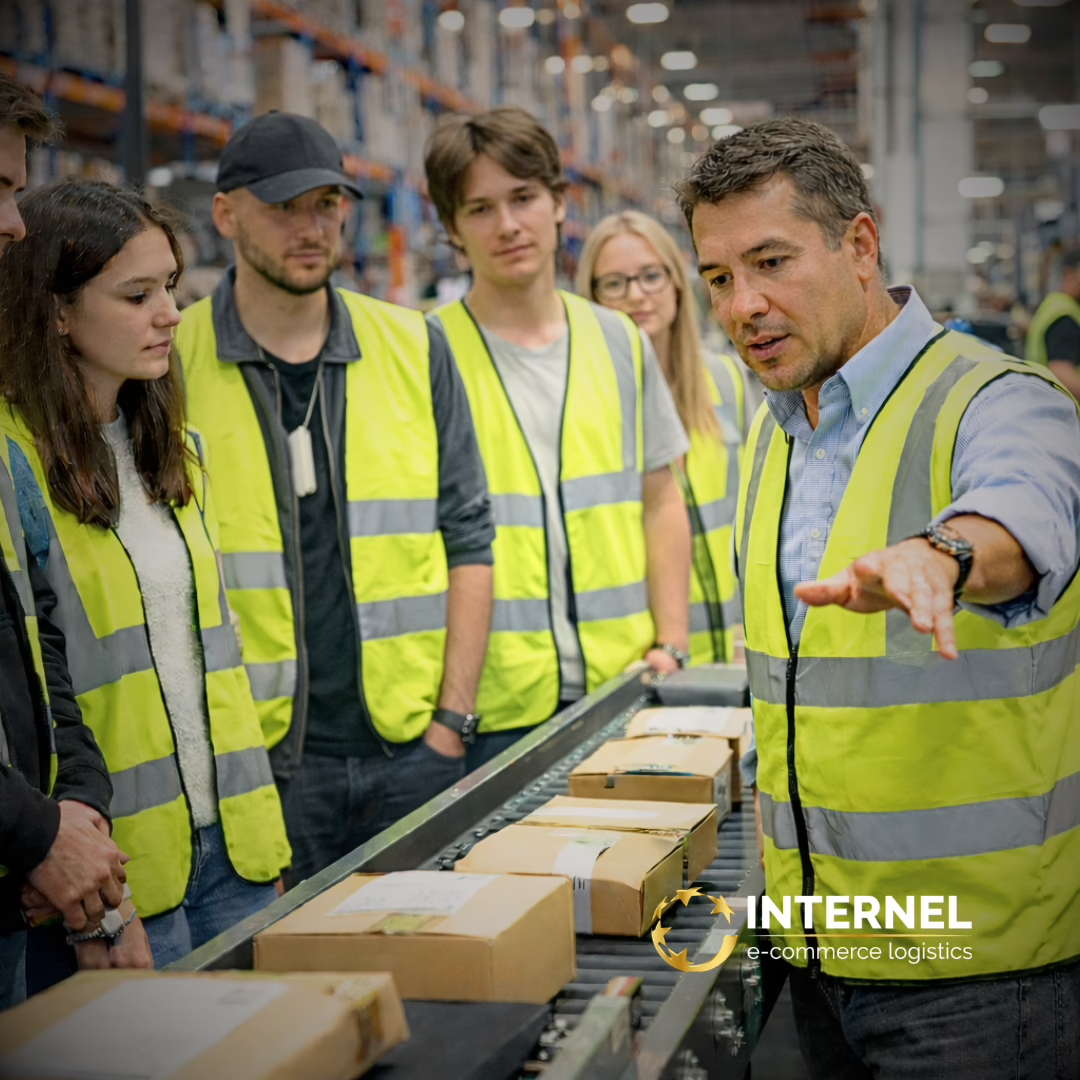
Last week, we welcomed students from FHNW (University of Applied Sciences and Arts Northwestern Switzerland) to our warehouse in Warsaw again. These visits have become a regular part of our year, and they always lead to the same moment: a shift in perspective.
Most people experience e-commerce only from the front end. They browse, place an order, receive a confirmation, and expect the parcel to arrive without thinking much about what happens in between. That invisible part is exactly where most of the real work begins.
During the visit, we walked the students through how fulfilment actually works in practice, as a sequence of decisions and operations that directly affect delivery speed, accuracy, and customer satisfaction.
From order confirmation to warehouse execution
As soon as a customer completes an order, the information flows into the warehouse management system. At this point, everything depends on how well the setup behind the scenes is structured.
Stock accuracy was one of the first things we discussed. If inventory data is even slightly off, the entire process becomes unreliable. This leads to delays, incorrect shipments, and unnecessary returns. For e-commerce brands operating across multiple EU markets, this becomes even more critical.
A fulfilment centre in Poland often serves as a central hub for these operations, especially for brands selling across Germany, France, Italy, and other EU countries. The advantage is not only location, but also the ability to manage stock and orders in one consistent system.
What picking and packing really involve
Walking through the warehouse made it clear that picking is not just a mechanical task. It requires precision, coordination, and a system that reduces the chance of error.
Each picked item carries responsibility. A single mistake at this stage leads to a wrong delivery, a return, and additional operational cost. Over time, these small errors accumulate and directly affect customer trust.
Packing follows immediately, and it plays a bigger role than many expect. The parcel is often the first physical interaction a customer has with a brand. Its condition, presentation, and protection all contribute to the overall experience.
We also showed how plastic-free packaging works in daily operations. Sustainability only makes sense when it can be applied consistently, without slowing down fulfilment or increasing complexity.
Shipping decisions in a cross-border environment
Shipping was another area where expectations often differ from reality. Many assume that the lowest price is the main factor. In practice, the decision depends on the destination, delivery expectations, and reliability of each carrier.
Different markets behave differently. Germany expects consistency and reliability. Italy often requires more flexibility in delivery. France has its own last-mile specifics. These differences influence how shipping is set up and which partners are used.
Poland is not always the cheapest or the fastest option for every route. However, for many e-commerce brands, it provides a balance between cost, reach, and operational control. This is one of the reasons why Poland fulfilment is often considered when scaling across Europe.
Returns as a core part of fulfilment
One part of the process that stood out to the students was returns handling.
Returns are part of a continuous flow and need to be managed with the same level of structure as outbound shipping.
We explained how returned items are received, checked, and either returned to stock or separated if they cannot be resold. The speed and accuracy of this process have a direct impact on cash flow and inventory availability.
For many e-commerce businesses, improving returns management leads to immediate operational gains.
What this means for e-commerce brands
For brands working with a 3PL provider, these processes are part of everyday operations. When they function well, they remain almost invisible. Orders move, stock stays accurate, and customer support is not overloaded with avoidable issues.
When they are not aligned, problems appear quickly. Delays, incorrect deliveries, and inefficient returns handling create friction that affects both the customer experience and internal resources.
When choosing a fulfilment partner, pricing and location matter, but what really counts is how well the entire system works together day to day.
A final perspective
For us, these visits are a chance to step back and look at our work through fresh eyes.
What feels routine internally is often a completely new perspective for someone seeing it for the first time. Understanding what happens after the “Buy” button changes how people think about e-commerce, especially when they realise how much depends on the physical execution behind it.
For the students, it connects theory with real operations.
For us, it is a reminder that fulfilment depends on doing the same things right every single day.
The students were brought to Warsaw by Marcel Hirsiger, who regularly organizes these visits as part of their program in Poland. During their time at INTERNEL, they were guided through the warehouse by CEO Rolando Casanova, who shared practical insights into daily fulfilment operations and how they support e-commerce across Europe. The visit was also attended by Ulrich Schendimann, representing the Swisschamber Poland, which added a broader business and cross-border perspective to the discussion.
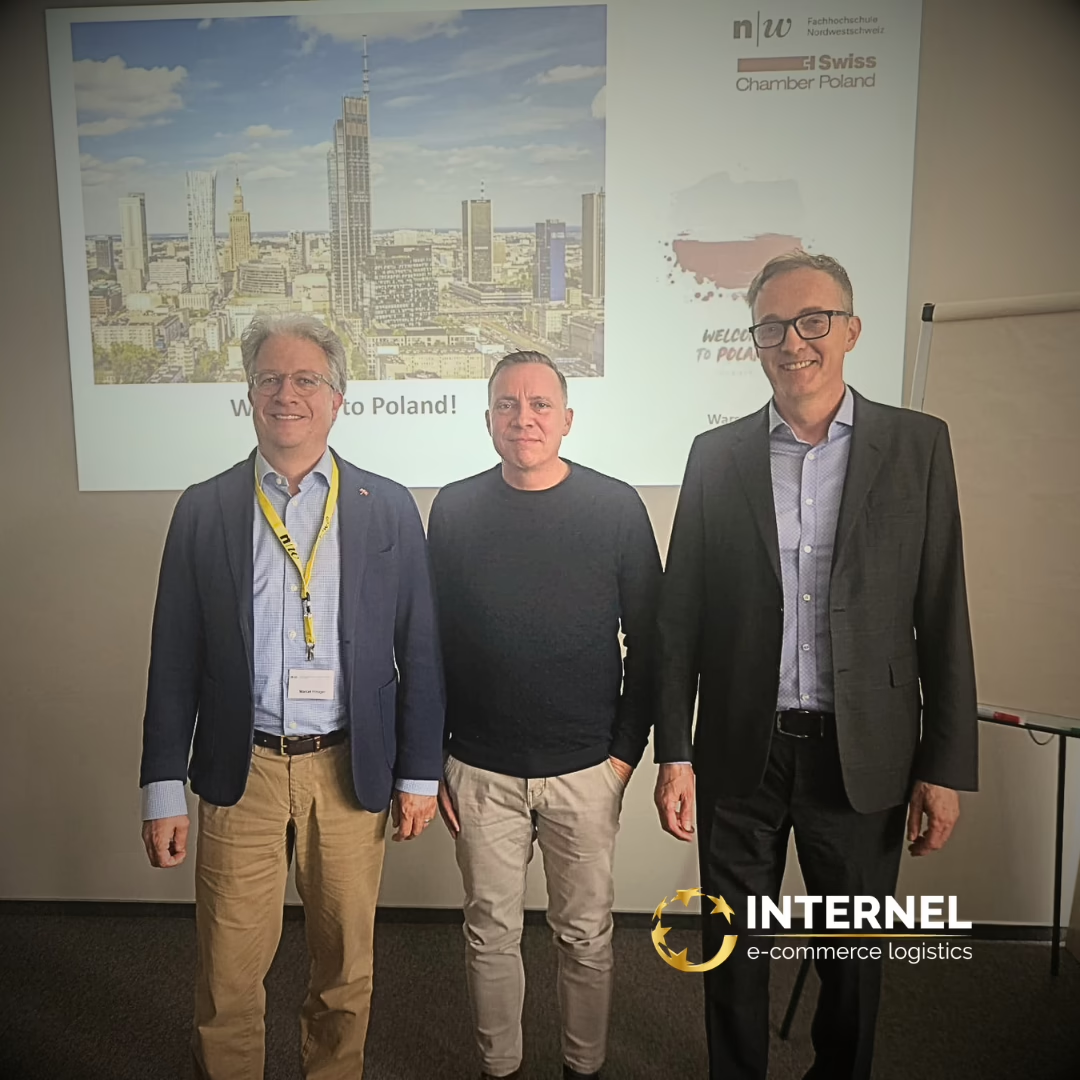
We are already looking forward to welcoming the next group of students again next year.