

The Valentine Rush: Where E shops Lose Time, Money, and Trust
Valentine week is a great stress test for e-commerce because everything happens fast and expectations are high. Shops can prepare a beautiful campaign, invest in paid traffic, build a gift landing page, and still end up disappointing customers for a simple reason: the operational side was not ready for the exact promise the marketing created.
This is the point in the year when the gap between “selling” and “shipping” becomes visible within days, sometimes within hours.
The gap nobody plans for: two calendars
What often goes wrong is not a lack of effort or competence. It is timing. Marketing works with a fixed campaign date, while fulfilment needs lead time. If the campaign plan stays inside a marketing calendar and the warehouse only hears about it when ads are already running, the whole operation is forced into last minute mode. At that point, decisions that should have been calm and boring suddenly become urgent. Cut off times get debated in the middle of the week, picking priorities change on the fly, and packing becomes improvisation. People work faster, but speed alone rarely improves outcomes. When routine breaks, the error rate climbs and customer service starts to feel the pressure immediately.
The classic Valentine mistake: ads up, stock and ops not ready
During Valentine week, late delivery has a different weight than it does in a normal period. If a parcel arrives after the date, the customer experience drops sharply and the brand gets blamed, even if the shop did everything right on the marketing side. That is why this week rewards teams who treat fulfilment as part of the campaign, not as a separate department that “handles shipping later”.
One of the most common patterns we see is a strong marketing push that is not aligned with inventory and operational capacity. A shop knows what it wants to promote, but the stock position is checked too late, or only at a high level, without looking at which SKUs will spike and how fast they can be replenished. In practice this leads to ads running on products that are already on the edge, then comes the scramble: substitutions, split shipments, refunds, apology emails, and a lot of extra work for the warehouse. It is costly, it wastes time, and it turns a good campaign into a support problem.
At high volume, one extra packing step changes everything
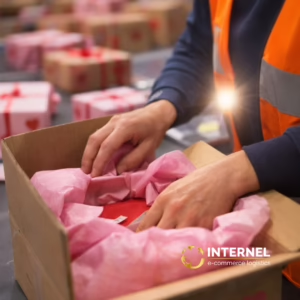
Another pain point is packaging and campaign extras. Gift wrap, special boxes, tissue paper, stickers, handwritten notes, or Valentine cards sound simple, and that is exactly why they are often decided last minute. Procurement, printing, and delivery times do not care about creativity. When materials arrive late, teams start packing with whatever is available, the unboxing experience becomes inconsistent, and the packing line slows down. The impact is manageable when you ship dozens of parcels. It becomes a serious operational issue when you ship hundreds or thousands per day, because even a small additional step changes the throughput, quality checks, and staffing needs. Adding an insert to every parcel can be a smooth process when it is planned, but it can also turn into a bottleneck, if it is introduced without clear rules, without the right packing stations, and without enough time to train people on the new flow.
The peak week relationship problem: 3PL informed too late
There is also a relationship issue that shows up every peak week: many shops work with a 3PL, but they do not treat that 3PL as a planning partner. They inform them late, they do not share realistic volume expectations, and they assume the warehouse will somehow “handle it”. A 3PL can prepare for peaks, but only when it has the information early enough to adjust staffing, packing materials, and courier pickups. The same applies to in house logistics. Running fulfilment internally can work very well, but peak weeks expose the hidden cost of operating close to capacity. Space becomes tight, picking routes get messy, teams get tired, and mistakes rise. The shop may still dispatch most orders, yet the effort behind it is much higher than usual, and the stress does not disappear on February 15. It stays in the form of returns, claim handling, and a team that needs time to recover.
What fulfilment needs to know before the campaign goes live
The good news is that the fix is rarely complicated. It is mostly about planning habits and basic communication. When a shop shares a campaign plan early, even in a short and practical format, fulfilment can stay stable instead of reactive. The warehouse needs to know what volume to expect, which SKUs will be pushed, whether any special packing rules apply, whether there will be inserts, cards, samples, or gift wrapping, and which markets matter most for delivery timing. With that information, capacity can be planned, materials can be secured, priorities can be set, and dispatch can stay consistent.
The one detail most e shops wish they had planned earlier
This is exactly the difference we see at INTERNEL during weeks like this. When e-shops share their plans early, the fulfilment operation has room to prepare and the week feels controlled. When plans come late, everyone still works hard, but the results are weaker and the risk of missed promises grows quickly. Valentine week is short, but it gives a clear lesson: the strongest campaigns are the ones where marketing, inventory, and fulfilment move together.
💡 TIP FROM INTERNEL:
If you run an e-shop, this is a useful question to ask while the week is still in motion:
What is the one operational detail you wish you had planned last week?
Final thought
If this sounds familiar, you are not alone. INTERNEL works with e-shops across the EU and sees these patterns every peak season. If you want to compare notes, get in touch.
💡 Read also our blog post: E-Fulfillment for those who expect more