

Valentine week exposes the gap between advertising and fulfilment
Valentine week has a way of revealing weaknesses that stay hidden during calmer periods. One of the most common ones is the disconnect between advertising activity and real stock availability. From the outside, everything may look under control. Campaigns are running, traffic is strong, and orders are coming in. Inside the warehouse, however, the picture often looks very different.
When campaigns run on assumptions instead of inventory reality
From a fulfilment perspective, the problem usually does not start with stock being low. It starts with stock visibility being treated as a secondary concern. Marketing teams know what they want to push, which products should perform, and how much budget is behind them. What is often missing is a realistic view of how fast those products can actually move through the warehouse and how quickly they can be replenished once demand spikes.
What misaligned ads and stock do to warehouse operations
In practice, this leads to a familiar sequence. Ads continue to run even when inventory levels are already under pressure. Orders pile up for SKUs that are close to selling out. The warehouse starts juggling priorities, switching picking lists, splitting orders, and trying to work around shortages. Customer service gets pulled in to explain substitutions, delays, or refunds. What began as a sales success turns into operational damage control.
For fulfilment teams, this situation is particularly challenging because it creates inefficiency at every step. Orders that could have been processed cleanly now need manual decisions. Picking paths change during the day. Packing stations handle partial orders. Couriers receive shipments later than planned. Each individual issue may seem small, but together they slow the entire operation and increase the risk of errors.
During a time sensitive period like Valentine week, even minor delays can have a disproportionate impact on customer satisfaction.
Why customers blame the brand, not the process
From the customer’s point of view, the experience is simple. They ordered on time, responded to a campaign promise, and expected delivery to match that promise. When something goes wrong, the brand takes the blame, regardless of whether the issue originated in marketing, inventory planning, or fulfilment. Discounts and apology emails rarely fix that impression.
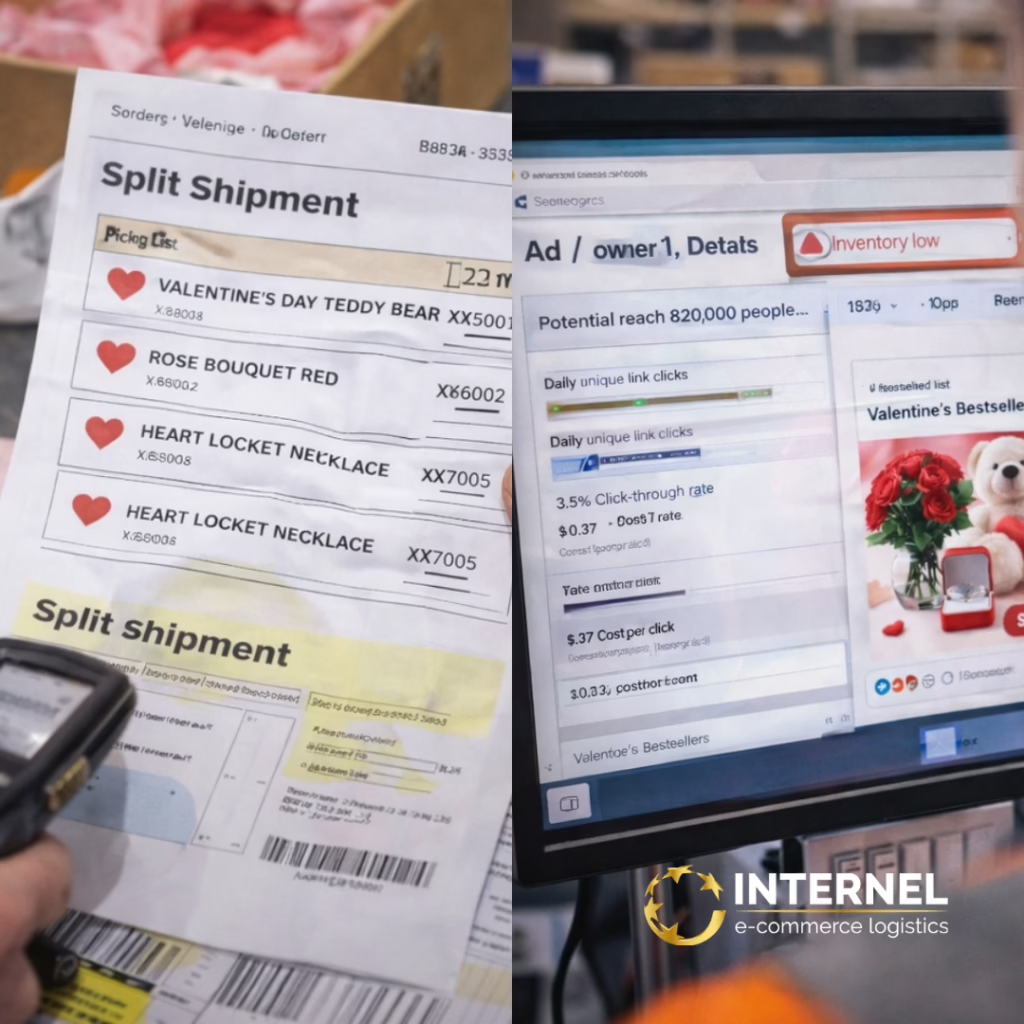
What we see in fulfilment when inventory is not part of the campaign plan
At INTERNEL, we see this pattern repeatedly during peak campaigns. The difference between a smooth week and a chaotic one is rarely effort or commitment. It is alignment. When inventory data is connected to campaign planning early, fulfilment can prepare properly. Clear picking rules can be set. Stock thresholds can trigger campaign adjustments before the situation escalates. Instead of reacting to problems, the warehouse stays in control.
How early alignment protects operations and customer promises
Effective alignment does not require complex systems or long meetings. It starts with shared information. Fulfilment needs to know which SKUs will be promoted, what daily volumes are expected, how flexible the campaign is if stock runs low, and which markets are most sensitive to delivery timing. With this input, capacity planning becomes realistic and operational priorities remain stable, even under pressure.
This alignment also improves communication with the client. Instead of informing them about issues after they occur, fulfilment teams can flag risks early and suggest adjustments while there is still time to act. That changes the relationship from reactive problem solving to proactive partnership, which benefits both sides and, most importantly, the end customer.
Valentine week is short, but its lessons apply to every campaign driven peak. Advertising and fulfilment cannot operate on separate tracks without consequences. When ads and stock are aligned, operations flow more smoothly, communication stays clear, and customers receive what they were promised, when they were promised it.
💡 TIP FROM INTERNEL:
A simple question every e-shop should ask before the next campaign.
Is stock reality part of your campaign plan, or something you check once the problems start showing up?
Final thought
If this sounds familiar, you are not alone. INTERNEL works with e-shops across the EU and sees these patterns every peak season. If you want to compare notes, get in touch.
💡 Read also our blog post: E-Fulfillment for those who expect more