

Returns two weeks after Valentine: the peak that does not end on Feb 14
Valentine week is over, campaigns are closed, dashboards have been reviewed, and revenue has been counted. On paper, everything may already look settled. In operations, however, the story often continues for weeks.
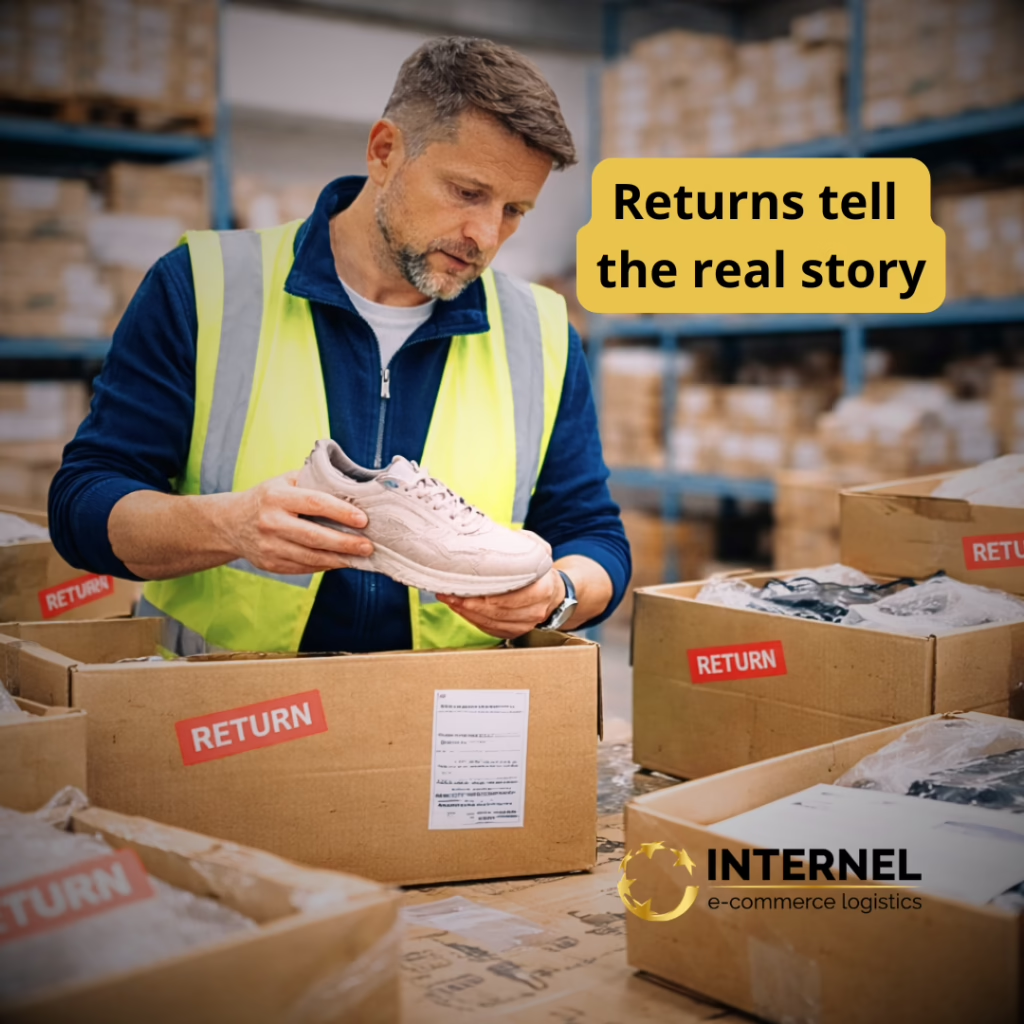
Few weeks after February 14, returns are still arriving. They occupy warehouse space, consume team capacity, and require careful handling. For many e-shops, whether they run in-house logistics or work with a 3PL, this is the phase where the real impact of the peak becomes visible.
Why returns increase after gifting peaks
Some returns are part of everyday e-commerce. A product does not meet expectations, a size does not fit, or a customer simply changes their mind. Gifting peaks add another layer.
Timing matters. When a parcel arrives too late, the emotional value of the purchase disappears. Even if the product is fine, the customer may request a refund. During intense peak days, packing errors become more likely. An incorrect item sent under time pressure leads not only to a return, but also to additional shipping cost and extra customer service workload. Rushed packing can also result in higher damage rates, especially if packaging materials were stretched during the peak.
Another pattern appears when delivery certainty is unclear. Some customers place a second order to ensure at least one gift arrives on time, then return the duplicate later. This behaviour does not show up during the peak itself. It surfaces in the following weeks.
Operational impact: the second wave
Processing returns is not a simple reverse of shipping an order. Every return needs to be received, checked, classified, recorded in the system, and either restocked, quarantined, or written off. Refunds must be triggered. Inventory must be updated. Communication with the client often follows.
When this volume overlaps with regular outbound activity, warehouses face a second wave of pressure. Teams that were already working at high intensity during the peak now need to maintain quality while recovering physically and operationally.
If returns are not processed quickly, inventory visibility suffers. Products that could be resold remain in limbo. Finance teams wait for final numbers. Customer satisfaction declines if refunds take too long.
The week after the peak is rarely quiet. In some cases, it is more complex than the peak itself.
In-house vs 3PL: where the difference shows
- For e-shops with their own warehouse, post-peak returns often reveal whether capacity planning covered the full cycle or only the sales spike. If no additional resources were allocated for inbound returns, the system becomes congested quickly.
- For 3PL operations, the difference lies in preparation and visibility. When return flows are defined in advance, capacity is reserved, and reporting is transparent, the afterwave is manageable. When returns are treated as secondary, they can delay recovery and distort performance metrics.
At INTERNEL, we treat peak season as a cycle that includes the build-up, the spike, and the post-peak phase. That means allocating space and staff not only for outbound orders, but also for inbound returns. It also means analysing return reasons with clients to understand whether issues were operational, product-related, or timing-related.
How to evaluate Valentine performance properly
Revenue is only the first layer of analysis. Two weeks after the peak, it becomes more meaningful to look at:
- On-time delivery rate by market
- Return rate and main return reasons
- Number of picking or packing errors
- Refund processing time
- Customer service tickets related to delivery or product issues
- Review sentiment in the weeks following the campaign
These indicators show whether the campaign strengthened customer trust or weakened it.
Final thought
If you are currently reviewing your Valentine results, include returns in the conversation. If you would like to discuss how to plan peak and post-peak capacity more realistically, INTERNEL is ready to compare notes.
💡 Read also our blog post: Valentine Week in E-Commerce: Marketing Goes Live, Operations Gets Hit First